Across Bedford and the surrounding villages, rooftops are becoming mini power stations. With energy prices remaining unpredictable and sustainability targets tightening, solar panels are proving to be one of the most practical upgrades for households and businesses alike. Modern systems are efficient, smart, and robust—making it easier than ever to generate low-cost electricity, reduce reliance on the grid, and store surplus energy for later use. From semi-detached homes in Kempston to retail units and warehouses around the town, well-designed solar PV and battery storage can transform how properties consume—and think about—energy.
If you’re weighing up Solar Panels in Bedford, it helps to understand how local climate, roof type, and your daily energy patterns shape the best system for you. Below is a clear, in-depth guide to performance, design choices, costs, and real-world Bedford scenarios to help you make a confident, well-informed decision.
Does Solar Really Work in Bedford’s Weather? What to Expect
Yes—Bedford’s location in the East of England offers solid year-round solar potential. A well-positioned system here can generate roughly 950–1,050 kWh for every kWp installed each year. In practical terms, a typical 4 kWp domestic array might produce around 3,600–4,200 kWh annually. That’s a substantial share of an average home’s electricity use, particularly when combined with smart controls and battery storage to catch surplus daytime generation for evening and overnight consumption.
Performance depends on several site-specific factors. Orientation and pitch matter: south-facing roofs around 30–40 degrees yield the highest annual output, but east/west arrays still perform strongly—often with a gentler generation curve that can better match morning and late-afternoon usage. Minimising shade is vital; chimneys, dormers, nearby trees, or taller neighbouring buildings can all cast shadows. When partial shade is unavoidable, optimised systems—using power optimisers or microinverters—help ensure one shaded panel doesn’t significantly reduce the whole array’s production.
Weather in Bedford contributes to a seasonal pattern. Expect long, bright summer days to do most of the heavy lifting, with spring and early autumn delivering surprisingly strong returns thanks to cooler, panel-friendly temperatures. Winter generation is lower but still meaningful—especially for offsetting daytime base loads such as refrigeration, broadband, and lighting. Many households bolster winter value with load-shifting tactics: running dishwashers or washing machines during sunny spells, using immersion diverters to heat hot water from surplus PV, and storing daytime overproduction in a battery for evening use.
Planning considerations are typically straightforward. In most cases, residential solar panels in Bedford fall under permitted development rights in England, so planning permission isn’t required. Exceptions can apply for listed buildings, some conservation areas, or installations facing highways at roof level, so it’s wise to confirm with the local authority or a qualified installer. On the grid side, your installer will handle utility notifications and ensure compliance with the latest wiring standards, so the system is both safe and fully documented for insurance, resale, and tariff eligibility.
Exporting surplus energy also adds value. The Smart Export Guarantee (SEG) pays you for electricity you send to the grid. Rates vary by supplier and tariff, but the mechanism helps shorten payback and improve lifetime returns. With thoughtful design, a Bedford home can use a large portion of its own generation and still benefit from SEG payments on sunny days.
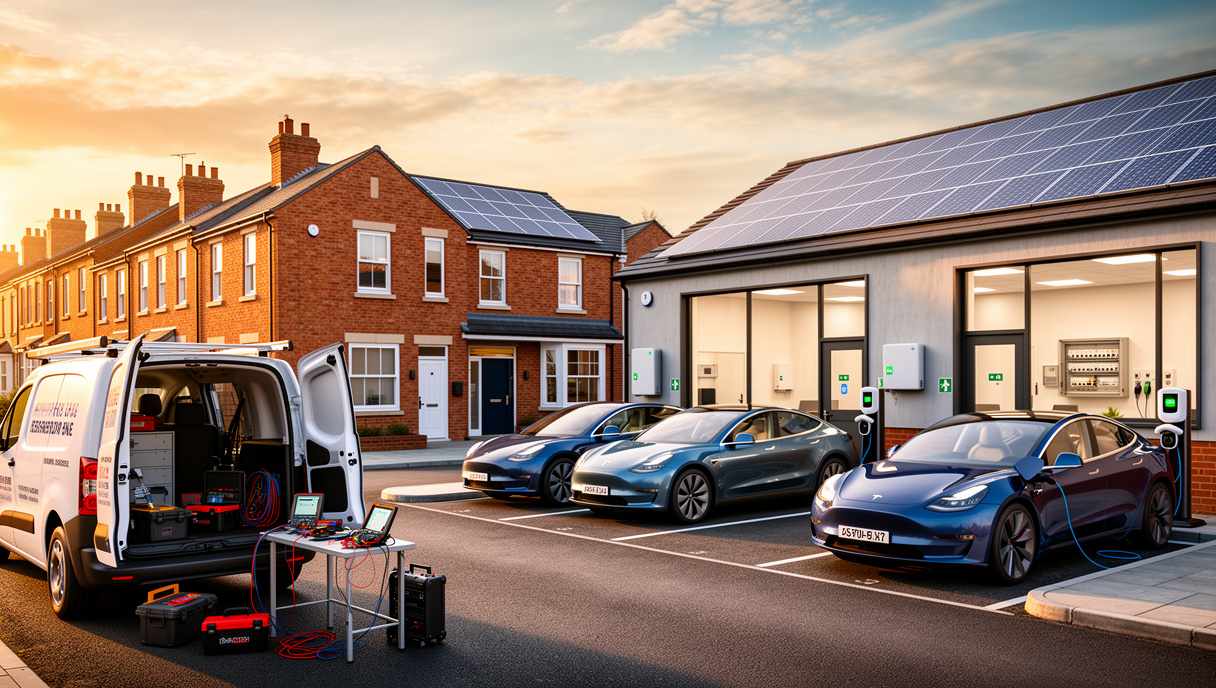
Designing the Right System: Panels, Inverters, Batteries, and EV Integration
Great solar outcomes start with great design. Today’s monocrystalline panels are compact and efficient, and most reputable brands offer 20–25 year performance warranties. Your installer will size the system to your roof, annual consumption, and budget—balancing generation potential with real-world usage. For example, households that are out during the day often gain more value from pairing mid-sized arrays with a well-matched battery, whereas work-from-home users may prioritise a slightly larger array to maximise on-site daytime consumption.
Inverters are the system’s workhorse, converting DC from panels into AC for your property. Classic string inverters are cost-effective and reliable on unshaded roofs. Where occasional shade or complex roof layouts are present, panel-level electronics—power optimisers or microinverters—can increase harvest and improve diagnostics by allowing each panel to perform independently. Most inverters now offer app-based monitoring for live and historical data, giving you visibility over generation, self-consumption, battery state-of-charge, and export activity.
Battery storage has become a game-changer in Bedford’s solar scene. A 5–10 kWh unit is common for homes, soaking up midday surplus and releasing it when demand peaks in the evening. This raises self-consumption, reduces grid imports, and can provide limited backup to priority circuits with the right configuration. For larger households or those with electric heating or heat pumps, bigger batteries may make sense—especially if tariffs offer off-peak rates you can capitalise on for overnight top-ups in winter.
Many Bedford residents also integrate EV chargers. Solar-integrated chargers can prioritise using excess generation to top up your car, lowering the effective cost per mile. Hot water diverters contribute further savings by diverting excess PV to an immersion heater, reducing reliance on gas or electric boilers during sunny periods. These add-ons multiply the value of your array by ensuring you capture and use as much clean energy as possible on site.
Safety and compliance underpin every decision. Systems should be designed and installed to current UK wiring regulations, with appropriate protections such as RCDs and surge protection devices where required. Quality installers will handle structural assessments for mounting, scaffolding, electrical testing, and grid notifications, and they’ll provide a comprehensive handover pack. Regular servicing and remote monitoring keep performance on track. Panels are largely low-maintenance; in Bedford’s climate, occasional rain often suffices to wash surfaces, with periodic inspections recommended to confirm fixings, electrics, and inverters are all in good order.
Costs, Savings, and Local Scenarios for Bedford Homes and Businesses
While every property is different, typical domestic systems in Bedford provide compelling value. A well-specified 3–4 kWp array often falls in the region of £5,000–£7,500, depending on panel choice, roof complexity, and whether optimisers are used. Stepping up to around 6 kWp may come in closer to £7,000–£10,000. Adding battery storage usually adds £3,000–£6,000, with capacity, brand, and integration features influencing price. Commercial rooftops benefit from economies of scale, with cost per kWp tending to decrease on larger installations—particularly on expansive, unobstructed units.
Annual savings vary with usage patterns and tariffs. Households that can self-consume a large portion of their generation—by running appliances during sunny periods and storing the rest—often cut electricity bills by 30–70%. The Smart Export Guarantee bolsters returns by paying for exported energy; rates differ among suppliers, but even modest export values can shorten payback. Across many Bedford installations, payback periods frequently fall between 5 and 10 years, with lifetime returns that remain attractive given panel warranties of two decades or more.
Real-world scenarios help illustrate what’s possible. Consider a three-bed semi in Kempston with a 4 kWp array and a 5 kWh battery. With around 3,800 kWh annual generation, sensible daytime use and storage could see self-consumption rise above 60%. Depending on tariffs and export rates, that might translate to several hundred pounds of annual savings, with additional value in resilience, predictable costs, and lower carbon emissions. For a small business—say, a workshop or bakery operating weekdays—daytime-heavy loads often align perfectly with solar generation. A 30 kWp system on a commercial roof could meaningfully reduce imported energy and improve margins, with many projects achieving attractive paybacks thanks to high self-use.
Installation is typically swift and minimally disruptive. A home survey clarifies roof structure, shading, and electrical capacity. After design approval, scaffolding goes up, panels and mounting are fitted, and the inverter and battery are commissioned—often within one to two days for a domestic job. You’ll receive a full system handover with performance expectations, warranty details, and grid notification confirmation. To access SEG payments, you’ll typically need an MCS certificate and a smart meter; a reputable installer will advise on these requirements and coordinate the paperwork so you can start benefiting right away.
Bedford’s varied property stock—from Victorian terraces and post-war semis to modern estates and commercial units—means there’s no one-size-fits-all answer. But with the right survey, quality components, and careful system design, Solar Panels in Bedford deliver dependable, long-term value. Whether you’re a homeowner chasing lower bills and better energy independence or a business targeting predictable operating costs and sustainability gains, a tailored solar and storage solution can make your building cleaner, smarter, and more resilient for years to come.

Cardiff linguist now subtitling Bollywood films in Mumbai. Tamsin riffs on Welsh consonant shifts, Indian rail network history, and mindful email habits. She trains rescue greyhounds via video call and collects bilingual puns.